Getting more people to your website is important, but the real opportunity comes from getting more of those people to actually take the next step.
A strong conversion rate optimization (CRO) strategy helps businesses improve the percentage of website visitors who complete a valuable action, whether that means making a purchase, filling out a contact form, booking a consultation, signing up for an email list, or requesting a quote.
The best part is that you don’t always need more traffic to see better results.
Sometimes, the traffic is already there. The problem is that your website isn’t giving visitors enough reasons—or enough clarity—to convert.
This is why website conversion rate optimization should be an important part of any modern digital marketing strategy. Businesses can combine the fields of analytics, user experience, messaging, SEO, content, and testing to identify where potential customers are dropping off and create a smoother path toward conversion.
Key Points
- Conversion rate optimization focuses on getting more value from the traffic you already have.
- Higher website traffic means very little if visitors aren’t taking meaningful actions once they arrive.
- Clear messaging, compelling calls-to-action, trust signals, mobile usability, and simple navigation can all influence conversion behavior.
- Ecommerce conversion rate optimization often focuses on product pages, shopping carts, checkout experiences, pricing clarity, and reducing purchase friction.
- B2B conversion rate optimization requires a longer-term approach that supports research, trust-building, lead nurturing, and multiple decision-makers.
- Analytics and conversion rate optimization tools can help identify where users are getting stuck, but data is only useful when it leads to better decisions.
- A conversion rate optimization audit can uncover opportunities across your website, customer journey, content, and calls-to-action.
- CRO is most effective when your website, SEO, social media, email marketing, paid media, and content strategy are working toward the same goals.
Getting someone to your website isn’t exactly easy.
You’re investing in SEO. You’re posting on social media. You’re running email campaigns. Maybe you’re paying for Google or Meta ads. You’re creating content and trying to keep up with whatever the algorithm decided to care about this week.
Then someone finally lands on your website…and leaves. No purchase, form submission, nothing.
That’s where conversion rate optimization comes into play.
Instead of constantly asking, “How do we get more traffic?” CRO asks a more valuable question:
“How do we get more of the people already visiting our website to take action?”
1. What Is Conversion Rate Optimization?
Conversion rate optimization is the process of improving your website and marketing experience so a greater percentage of visitors complete a desired action.
The action will look different depending on your business.
For an ecommerce store, it may be a completed purchase.
For a service-based business, it could be a consultation request.
For a B2B company, it could be downloading a white paper or becoming a qualified lead.
For a local business, it might be getting directions, making a reservation, or calling the business.
The basic calculation is straightforward:
Conversion Rate = (Conversions ÷ Total Visitors) × 100
So, if 1,000 people visit your website and 30 complete your desired action, your conversion rate is 3%. The real progress comes from understanding why some people convert while others don’t. Asking questions like “Is the offer unclear?” or “Is the page too slow?” is the first step in CRO.
2. Why Traffic Alone Doesn’t Guarantee Sales
One of the easiest traps in digital marketing is assuming that more traffic automatically means more revenue.
Imagine two websites.
| Website A | Website B |
| Monthly Visitors: 10,000 | Conversion Rate: 1% |
| Conversion Rate: 1% | Conversion Rate: 4% |
Website B receives half the traffic but generates twice as many conversions. That’s the power of improving the experience after someone arrives.
This is also why CRO can make your other marketing investments more valuable. A stronger conversion rate means the traffic you’re getting from SEO, paid advertising, social media, email marketing, and content has a better chance of producing a business result.
Instead of continuously pouring more people into the top of the funnel, you’re improving what happens next.
3. Conversion Rate Optimization Best Practices
There isn’t a magic CRO checklist that works for every business. A restaurant, SaaS company, ecommerce store, and local contractor all have different customer journeys.
Still, there are several conversion rate optimization best practices worth reviewing on almost every website.
Make Your Value Proposition Immediately Clear
Within seconds, visitors should be able to understand:
- What you do
- Who you help
- What makes you different
- What they should do next
If your website says something vague like “Helping Brands Unlock Their Potential,” you may have a beautiful sentence that tells the visitor almost nothing.
Your headline, supporting copy, visuals, and CTA should work together to communicate your services and value quickly.
Use Strong Calls-to-Action
A call-to-action should make the next step obvious.
“Submit” doesn’t tell someone much, but “Book Your Free Consultation” does.
Your CTA should match the stage of the customer journey.
Someone discovering your brand for the first time likely isn’t ready to buy. They may want to read a guide, watch a video, join your email list, or explore your services.
Make Trust Impossible to Miss
People are naturally cautious online, especially when the purchase is expensive or the business is new to them.
Add trust signals wherever they make sense:
- Customer reviews
- Testimonials
- Case studies
- Client logos
- Credentials
- Guarantees
- Product ratings
- FAQs
- Clear return or cancellation policies
Your website should show visitors evidence that you’re great rather than just telling them.
Reduce Friction
Every unnecessary click, slow loading time, or confusing form field creates more opportunities for someone to leave. For ecommerce brands, this matters enormously.
Baymard Institute’s ongoing checkout usability research has found that checkout design and usability remain major contributors to cart abandonment, with its latest research placing average cart abandonment at roughly 70%. They also identified a range of preventable UX issues, including complicated checkout processes, unexpected costs, and forced account creation.
4. Building a Strong Website Conversion Rate Optimization Strategy
A good website conversion rate optimization strategy starts with the customer journey.
Think about what happens from the moment someone discovers your business to the moment they become a customer.
Awareness
They discover you through search, social media, advertising, a referral, a podcast, an event, or another channel.
Consideration
They start researching by visiting your website, reading your content, and looking at reviews. They might evaluate your services or follow you on social media.
Conversion
They make a purchase, submit a form, book an appointment, or take another meaningful action.
Retention
The relationship continues after the first conversion through email, loyalty programs, content, customer service, and other touchpoints.
If one part of the journey is disconnected, conversion can suffer. What if your ad promotes an offer that isn’t immediately visible on the landing page?
This is why CRO shouldn’t exist in a vacuum. Your website experience needs to match the expectations created by the rest of your marketing.

5. Ecommerce Conversion Rate Optimization: Reducing Friction Before Checkout
For ecommerce businesses, ecommerce conversion rate optimization often starts with the product page.
A customer should be able to quickly understand what they’re buying and why they should buy it.
Strong product pages typically answer questions about:
- Features and benefits
- Pricing
- Size or specifications
- Availability
- Shipping
- Returns
- Customer reviews
- Product variations
- How and when to use the product
Great product photography and videography help, too.
Google’s own ecommerce guidance recommends providing structured product information because it helps your audience understand key details and improves your pages’ favorability to Google.
Then, there’s checkout. The customer has already done the hardest part, but don’t make them regret wanting what you have to offer.
Keep the process clear and transparent, starting by making guest checkout easy to find.
Here’s a tip: test the experience yourself on each of your devices. You’ll be amazed at what you notice when you’re not looking at your website through a marketing lens.
6. B2B Conversion Rate Optimization: Turning Visitors Into Leads
B2B conversion rate optimization looks different from ecommerce CRO because the path to purchase is usually longer.
A prospect may read five blog posts, download a resource, compare competitors, review your case studies, talk to a colleague, and then finally book a call.
That means your website needs to support the entire research process.
Helpful B2B conversion elements can include:
- Clear service pages through SEO copywriting
- Case studies
- Downloadable resources
- Industry-specific content
- FAQs
- Comparison content
- Strong lead forms
- Consultation CTAs
- Email marketing nurture sequences
Your website shouldn’t pressure every visitor into “Buy Now.”
Often, the best conversion is simply getting the person to take the next logical step.
7. The Role of Analytics and Conversion Rate Optimization Tools
You can’t optimize what you don’t understand; this is where analytics comes in.
Google Analytics allows businesses to define important actions as key events and analyze how different channels contribute to those actions.
Other conversion rate optimization tools can provide additional context through heatmaps, session recordings, form analytics, surveys, usability testing, and experimentation.
However, more data does not automatically equal better marketing.
You need to know what you’re trying to learn, and having twelve dashboards on your second monitor can’t help there.
For example:
“Why are people visiting our contact page but not submitting the form?”
“Why are mobile users converting at a lower rate?”
“Why are people adding products to their cart but not completing checkout?”
“Why does this landing page outperform the others?”
Start with the question, then find the data that helps you answer it.
8. Why a Conversion Rate Optimization Audit Matters
Sometimes you know your website isn’t performing as well as it could, but you don’t know where to start.
That’s when a conversion rate optimization audit can be incredibly useful.
A CRO audit can examine the entire conversion experience, including:
- Messaging: Is the value proposition clear?
- Navigation: Can visitors easily find what they need?
- Design: Are important elements visually obvious?
- CTAs: Is the next step clear?
- Forms: Are they simple enough to complete easily?
- Trust: Are there enough credibility signals?
- Mobile: Does everything work smoothly on smaller screens?
- Speed: Are technical issues getting in the way?
- Analytics: Are you tracking meaningful actions?
- Content: Does the page actually answer customer questions?
You may discover that the problem isn’t your homepage at all. An audit can help you identify the changes most likely to make a meaningful difference.
By consistently analyzing which blog posts drive the most add-to-cart actions, which product features generate the highest click-through rates, and where users drop out of your checkout flow, you can continuously expand your search real estate and safeguard your brand’s future.
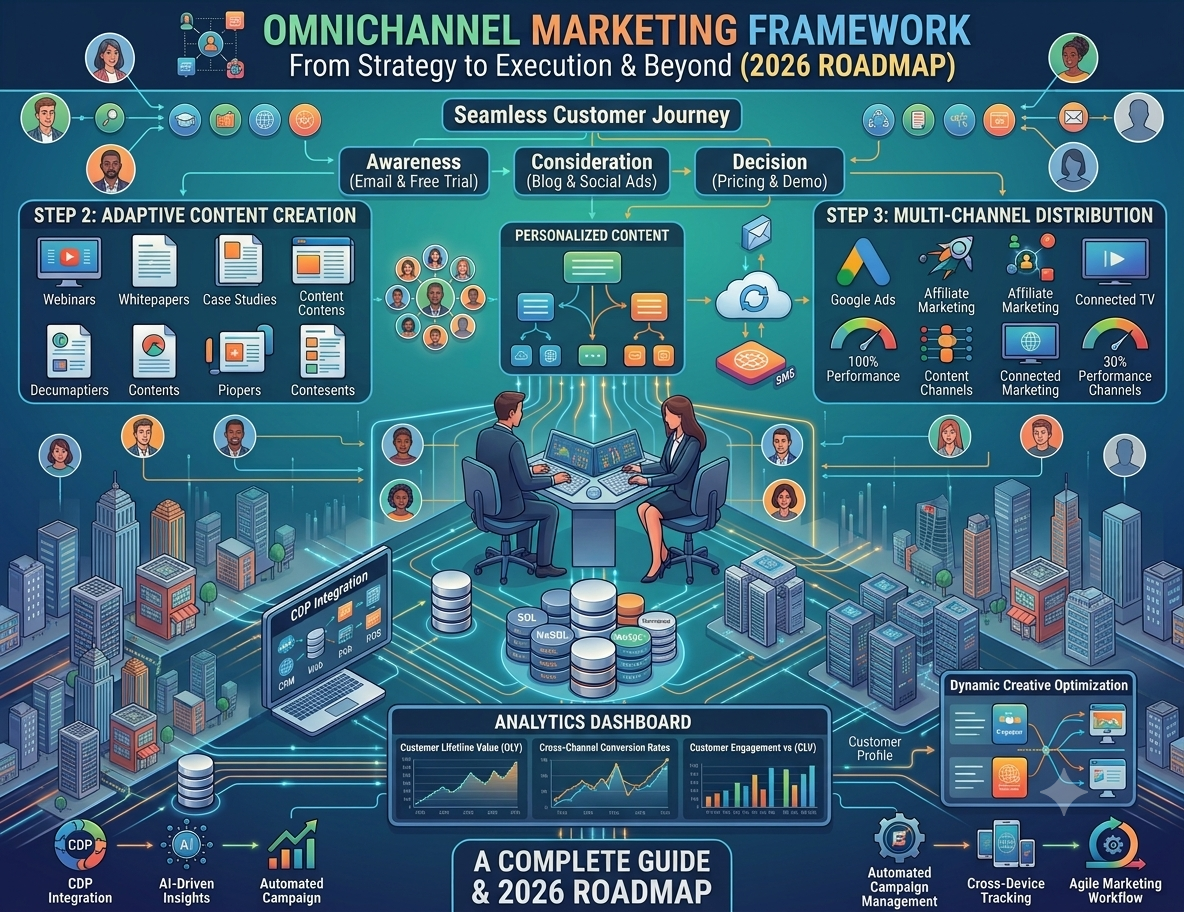
9. Why Conversion Rate Optimization Works Best as Part of an Omnichannel Strategy
Your website doesn’t operate independently. Neither does your SEO, email marketing, social media channels, or any other marketing activities.
The strongest digital marketing strategies connect everything so the customer experience feels consistent from one touchpoint to the next. For example:
A customer discovers your brand through SEO.
▼
They watch one of your social videos.
▼
They sign up for your email list.
▼
They receive a helpful nurture email.
▼
They return to your website to read a case study.
▼
Then they book a consultation.
That’s an omnichannel marketing strategy doing its job. CRO helps optimize each step of that journey.
Conclusion
Getting more traffic is always exciting.
But before you pour more money into ads or publishing more content, take a closer look at what happens after someone reaches your website.
Is anything making the process harder than it needs to be? The heart of conversion rate optimization is growing from the people who already know you.
At Sage Mind Marketing, we help businesses improve the full digital experience—from brand strategy and SEO to content, email marketing, social media, paid media, and website optimization.
Whether you’re a startup, service-based business, brick-and-mortar, or ecommerce brand, we’re here to help you turn more of the right traffic into meaningful action.
Let’s talk about how conversion rate optimization can help your business get more from the traffic you’re already earning.
FAQs
What is a good conversion rate?
There isn’t one conversion rate that is considered “good” for every business. Conversion rates can vary significantly depending on the industry, offer, audience, traffic source, device, and type of conversion.
Rather than obsessing over a universal benchmark, businesses should establish their baseline and look for meaningful improvements over time.
How can I improve my website conversion rate?
Start with the fundamentals of website conversion rate optimization: clarify your value proposition, strengthen your calls-to-action, make your website easier to navigate, add trust signals, reduce friction, optimize the mobile experience, and make sure you’re tracking important actions.
Then, use your data to determine which improvements should be prioritized first.
What are the best conversion rate optimization tools?
The best conversion rate optimization tools depend on what you’re trying to understand. Analytics platforms can help you track important actions, while heatmaps, session recordings, form analytics, surveys, and testing tools can help reveal user behavior and friction.
The tool matters less than the question you’re trying to answer.
How long does conversion rate optimization take?
CRO isn’t usually a one-and-done project. Some improvements can have an immediate effect, while others require testing and time to gather enough data.
The best approach is to treat conversion rate optimization as an ongoing process of analyzing, improving, testing, and learning.
Do small businesses need conversion rate optimization services?
Yes. In fact, small businesses can benefit significantly from CRO because they often have limited marketing budgets and need their existing traffic and leads to work harder.
Is conversion rate optimization only for ecommerce businesses?
Not at all! Ecommerce businesses optimize purchases, product pages, carts, and checkout flows. Service businesses may optimize consultation requests, phone calls, contact forms, and quote requests. B2B businesses may focus on lead generation, content downloads, demos, and nurture journeys.
Any business with a digital customer journey can benefit from conversion rate optimization.

Sage Mind Marketing is a women-led Connected Marketing Agency helping purpose-driven businesses grow through connected strategies across SEO, social media, email marketing, content, and the customer journey.