A social media content plan is a written roadmap that defines your goals, audience, platforms, content types, posting schedule, and success metrics. It tells your team what to publish, when to publish it, and how to measure results. A content plan covers the big picture (strategy), while a content calendar for social media shows the day-by-day schedule. Together, they help keep your content organized, make it easier to publish consistently, and help every post support a business goal such as leads, sales, or brand awareness. In 2026, a good plan also adapts to short-form video, search-driven social discovery, and AI-powered search results.
Keypoints
- Start with one clear, measurable goal before you plan any post.
- Pick platforms based on where your audience already spends time, not where every brand is.
- Build 3 to 5 content pillars so you never start from a blank page.
- Mix short videos, carousels, images, and text posts to reach different people.
- Use a content calendar to schedule posts ahead and stay consistent.
- Create content in batches to save time and keep quality steady.
- Review your results every month, drop what doesn’t work, and repeat what does.
Why Every Business Needs a Social Media Content Plan in 2026
Social platforms are no longer just places to share updates. People use them to discover products, read reviews, and decide who to hire. The Pew Research Center social media fact sheet shows that a large share of U.S. adults use platforms like YouTube, Facebook, and Instagram regularly. Your customers are already there.
But being present isn’t enough. Without a plan, businesses usually run into the same problems:
- Posting inconsistently, then disappearing for weeks
- Sharing content that doesn’t match what the audience wants
- Wasting money on content that has no goal
- Having no way to tell what is working
A plan fixes all four. It also helps your team stay aligned, especially when several people create, approve, and publish content.

Step 1: Set Clear Social Media Goals
Before you create a single post, decide what social media should do for your business. Vague goals like “get more engagement” are hard to measure. Use specific ones instead.
Try the SMART method: Specific, Measurable, Achievable, Relevant, Time-bound.
| Vague Goal | SMART Goal |
| Get more followers | Grow Instagram followers by 15% in 90 days |
| Get more leads | Generate 30 Inquiry form submissions from social in 3 months |
| Increase awareness | Reach 50,000 people on LinkedIn in the next quarter |
| Improve engagement | Raise average engagement rate from 2% to 4% by December |
Pick 2 or 3 goals at most. Too many goals water down your social media content strategy.
Step 2: Understand Your Audience
You can’t create content people care about if you don’t know who they are. Write down a simple audience profile:
- Who are they? Age, job, location, income range
- What do they struggle with? Their top 3 problems
- Where do they hang out online? Instagram, LinkedIn, YouTube, Facebook, TikTok
- What content do they enjoy? Quick tips, behind-the-scenes, customer stories, tutorials
If you’re starting from zero, it helps to find your target audience with an ideal customer profile before you plan a single post.
Step 3: Choose the Right Platforms
You don’t need to be on every platform. Being excellent on two beats being average on six.
| Platform | Best For | Content That Works |
| Lifestyle, retail, food, beauty, local brands | Reels, carousels, Stories | |
| B2B, services, consultants, recruiting | Thought leadership, case studies, text posts | |
| Local businesses, communities, events | Videos, event posts, customer reviews | |
| TikTok | Reaching younger audiences, product discovery | Short videos, trends, quick tips |
| YouTube | Education, how-tos, long-term search visibility | Tutorials, Shorts, interviews |
| Home, fashion, food, DIY, ecommerce | Pins, infographics, product images |
Quick rule: choose platforms based on where your audience already is, not where you personally like to scroll.
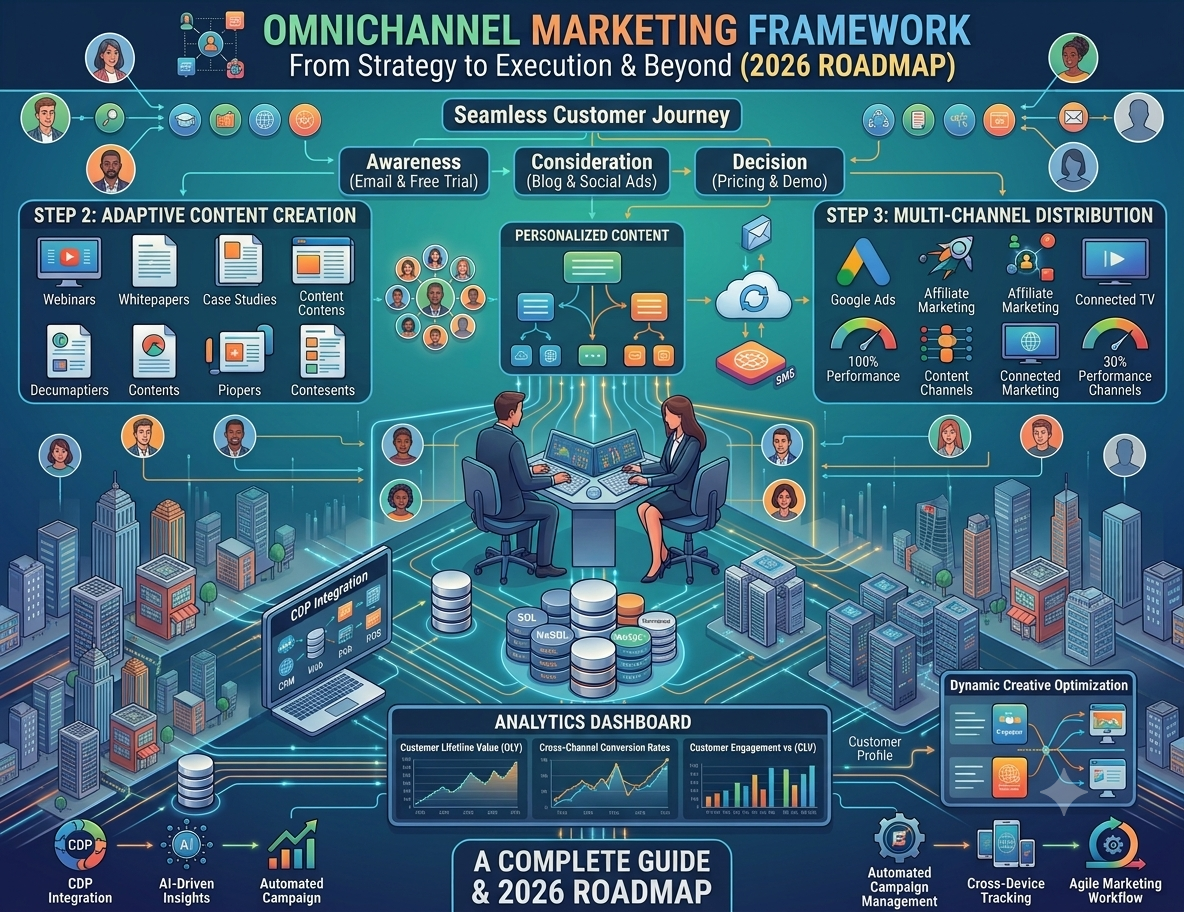
A strong social media marketing strategy also connects your platforms to each other. One YouTube video can become three Reels, a LinkedIn post, and a blog. That is the core idea behind omnichannel marketing. If juggling every channel feels like too much, an omnichannel marketing agency can keep the messaging consistent everywhere.
Step 4: Define Your Content Pillars
Content pillars are the 3 to 5 main topics your brand will talk about again and again. They make planning easier because you never start from a blank page.
Example pillars for a local service business:
- Educational: tips, how-tos, myth-busting
- Social proof: reviews, case studies, before and after
- Behind the scenes: your team, your process, your workspace
- Promotional: offers, launches, booking reminders
- Community: local events, partnerships, user-generated content
A simple ratio works well for most brands: 60% value, 20% brand personality, 20% promotion. Nobody follows an account that only sells. Strong content pillars also make it easy to batch your work, because each pillar already tells you what to create.
Step 5: Decide on Content Formats
Different formats do different jobs. Use a mix.
- Short-form video (Reels, Shorts, TikToks): best for reach and discovery
- Carousels: best for education and saves
- Single images and graphics: best for quick announcements and quotes
- Stories: best for daily updates and polls
- Live videos: best for Q&As and launches
- Text posts: best for opinions and LinkedIn conversations
Short video keeps growing in importance, so if your team hasn’t started, begin with short-form video and build from there.
Creating designs, videos, and captions every week takes real time. Many brands hand this part to [content creation services](ADD URL) so the team can focus on running the business.

Step 6: Build Your Calendar for Social Media Content
This is where your plan becomes action. A calendar for social media content is a schedule that shows what you’ll post, on which platform, on which date, and at what time.
How to Create a Content Calendar for Social Media (Simple Method)
- Pick your tool: A Google Sheet, Notion, Trello, or a scheduling tool all work.
- List your platforms and posting frequency: For example: Instagram 4x per week, LinkedIn 3x per week.
- Add key dates: Holidays, product launches, sales, events, and awareness days.
- Assign pillars to days: For example, Monday = tip, Wednesday = behind the scenes, Friday = offer.
- Write captions and prepare visuals in batches.
- Schedule posts and leave room for real-time content.
If you want another take on the setup, Hootsuite also explains how to build a social media content calendar step by step.
Social Media Content Calendar Template (Copy This)
| Date | Platform | Content Pillar | Format | Topic / Hook | Caption + CTA | Visual Status | Post Time | Status |
| Mon, 5 Jan | Educational | Carousel | “5 mistakes in your weekly posting” | Save this + link in bio | Designed | 11:00 AM | Scheduled | |
| Wed, 7 Jan | Social proof | Text + image | Client result story | Book a free call | In progress | 9:00 AM | Draft | |
| Fri, 9 Jan | Promotional | Video | January offer announcement | Claim the offer | Pending | 6:00 PM | Idea |
Columns you can add as you grow: campaign name, assigned team member, link to the post, and performance notes.
Plan Your Social Media Content with Ease!
Stay organized and consistent with our free Social Media Content Calendar Template. Plan your posts, organize content ideas, and schedule your social media campaigns more efficiently.
Download our Free Content Calendar Template
Step 7: Measure, Learn, and Improve
A plan that never gets reviewed is just a to-do list. Check your numbers at least once a month. Not every number deserves your attention, so focus on the marketing metrics that connect to your goals.
| Metric | What It Tells You | Goal It Supports |
| Reach and impressions | How many people saw your content | Awareness |
| Engagement rate | How much people interact | Community |
| Click-through rate | How many people visited your site | Traffic |
| Saves and shares | How useful your content is | Authority |
| Leads and conversions | Whether social drives revenue | Sales |
| Follower growth | Whether your audience is expanding | Growth |
Monthly review questions:
- Which 3 posts performed best, and why?
- Which format got the most saves or shares?
- Which pillar brought the most leads?
- What should we stop doing?
Social Media Content Plan Mistakes to Avoid
- Copying competitors exactly: Learn from them, but keep your own voice.
- Posting without a goal: Every post should have a purpose.
- Ignoring comments and DMs: Social media is a conversation, not a billboard.
- Overplanning: Leave some space in your calendar for trends and timely content
- Not repurposing: One idea should become several pieces of content.
- Quitting too early: Most plans need 90 days before the results become clear.
How to Make Your Content Plan Work for Search and AI Answers

In 2026, people don’t only find content through followers. They find it through Google, AI summaries, and social search. To make your content easier to discover:
- Use clear, plain language: Answer questions directly, the way people actually ask them.
- Keep your brand name, bio, and website consistent across every platform.
- Repurpose social ideas into blog posts and link them back to your website.
- Add helpful, original insights: Google’s Search Central guidance on helpful, people-first content is worth bookmarking.
Social, SEO, email, and ads work best when they follow one plan. A digital marketing agency in Long Beach can connect all of these, so each channel supports the same goals.
When to Get Professional Help
If you’re managing a team, multiple locations, or several platforms, doing everything in-house gets heavy fast. A social media marketing agency Long Beach businesses trust, like Sage Mind Marketing, can build the strategy, create the content, and manage the calendar for you.
Bottom Line
A strong social media content plan doesn’t need to be complicated. Set a clear goal, know your audience, choose the right platforms, build content pillars, and put everything into a simple calendar. Then review your results every month and keep improving.
Start small this week: pick one goal, choose two platforms, and fill in the first 2 weeks of your calendar using the template above. Once the habit sticks, growth follows.
If you’d rather have experts handle it, Sage Mind Marketing is ready to help you build and run a content plan that drives real business results.
Frequently Asked Questions
What is a social media content plan?
A social media content plan is a written document that lists your goals, audience, platforms, content types, and posting schedule. It keeps every post tied to a business goal.
How to create a social media content calendar?
List your platforms, set a posting frequency, and add key dates like launches and holidays. Then assign a pillar, format, and topic to each date. A simple Google Sheet is enough to start.
How to build a calendar for social media content that you can actually stick to?
Start with two platforms and two weeks of posts. Leave 10 to 15% of the calendar open for trends, and review it every month.
Where can I find a content calendar template for social media?
Copy the template shared in this blog into Google Sheets or Notion. Keep columns for date, platform, pillar, format, topic, caption with CTA, and status.
How to create a content calendar for social media if I’m a small business?
Pick one or two platforms your customers use and post 3 to 4 times a week. Repeat 3 to 5 pillars, such as tips, customer stories, and offers.
How to create a social media marketing plan?
Set a clear goal, define your audience, choose platforms, and decide your content mix and budget. Then build a posting schedule and track results monthly.
How to create a content strategy for social media?
Start with your goal and audience, then choose 3 to 5 content pillars and formats that suit each platform. Add a posting rhythm and the metrics you’ll track.
What is a social networking marketing strategy?
It is a plan for using social platforms to reach customers, build trust, and drive sales. It connects your channels so one idea works across Instagram, LinkedIn, YouTube, and Facebook.

Sage Mind Marketing is a Long Beach-based marketing agency helping businesses grow with expert branding and digital strategy to increase online visibility.